Les funcions de creació, control i impuls de l’acció política i de govern
El Parlament té la potestat legislativa, aprova els pressupostos, impulsa i controla l’acció política i de govern i compleix altres funcions. Aquí trobareu informació detallada sobre què fa i com ho fa.

Les funcions de creació, control i impuls de l’acció política i de govern
El Parlament de Catalunya, en representació del poble, vetlla pel bon govern de la nació. Això comporta el poder de crear i fer caure el Govern, i de criticar-ne, controlar-ne i orientar-ne l’actuació política i administrativa.
En primer lloc, el Parlament crea i manté el Govern; elegeix entre els seus membres la persona que ha d’exercir la presidència de la Generalitat, i aprova i sosté el programa de govern que aquella proposa. Aquesta funció de creació esdevé després funció de control, ja que el president i el Govern són políticament responsables davant el Parlament i han de dimitir si la cambra els nega la confiança. En tots dos casos el Parlament esperona i impulsa l’acció política i de govern orientant i estimulant el Govern o algun departament i encomanant-los actuacions.
Aquesta funció d’esperonar i impulsar l’acció política i de govern es compleix de la manera següent:
Correspon al Ple del Parlament votar la investidura del candidat a la presidència de la Generalitat, el qual és proposat pel president del Parlament després d’haver-se reunit amb els líders de totes les formacions presents a la cambra per a saber amb quins suports compten amb vista a la investidura. En el debat d’investidura, el candidat presenta el seu programa de govern.
Per a ser investit president de la Generalitat es requereix el vot favorable de la majoria absoluta del membres de la cambra en primera votació o de la majoria simple en segona votació.
Els membres del Parlament poden presentar mocions de censura contra el president de la Generalitat i contra el seu Govern, per rebutjar-ne l’actuació i proposar un nou candidat a la presidència de la Generalitat. La moció de censura ha de ser presentada per la desena part, com a mínim, dels diputats i en la votació ha de rebre el suport de la majoria absoluta. Si la moció s’aprova, el president i el seu Govern cessen, i el candidat proposat resulta investit nou president.
La presidència de la Generalitat, amb la deliberació prèvia del Govern, pot presentar qüestions de confiança, amb les quals pot demanar explícitament el suport de la cambra al seu programa, a una declaració de política general o a una decisió de transcendència excepcional. Si una qüestió de confiança no té el suport de la majoria simple dels membres del Parlament, el president i el Govern han de dimitir i s’inicia el procés per a una nova investidura d’un candidat a la presidència de la Generalitat.
El sistema parlamentari es defineix com un sistema d’equilibri i col·laboració entre el poder legislatiu i l’executiu. El sistema de Govern de la Generalitat és un sistema parlamentari en què els poders del Parlament són, en certa manera, contrapesats pels poders del president.
Investidura, moció de censura i qüestió de confiança són els instruments solemnes amb els quals el Parlament elegeix, controla o fa cessar el president de la Generalitat i el seu Govern. Com a contrapartida, i amb determinades cauteles, el president de la Generalitat pot dissoldre el Parlament i convocar noves eleccions.
Hi ha altres tècniques més habituals que permeten la interrelació Presidència – Govern – Parlament. Les més importants són:
- Els debats generals sobre l’acció política i de govern, que es tenen, si més no, un cop l’any, a l’inici del període de sessions de setembre. En els debats generals el president de la Generalitat o un membre del Govern exposa l’actuació d’aquest. Després tots els grups parlamentaris hi poden intervenir per a fer crítiques o observacions, o per a manifestar el suport al Govern. El debat normalment es clou amb la votació de resolucions, en què el Parlament fixa directrius per a l’acció de govern.
- Les interpel·lacions, que permeten el debat de qüestions de política general del Govern o d’algun departament. El diputat interpel·lant i el membre del Govern interpel·lat disposen cadascun d’un torn de deu minuts i d’una rèplica de cinc minuts. Les interpel·lacions poden concloure amb la presentació d’una moció, amb la qual la cambra manifesta la seva posició o fixa objectius i dona instruccions al Govern respecte a la qüestió debatuda.
- Les preguntes, amb què un membre del Parlament demana una informació respecte a qüestions d’ordre menor. Hom pot sol·licitar que les preguntes tinguin resposta escrita o resposta oral, la qual es pot donar en una comissió o en el Ple. En cada sessió ordinària, el Ple reserva una hora per a la substanciació de preguntes al president de la Generalitat i als membres del seu Govern.
- Les sessions informatives dels membres del Govern a les comissions, que els permeten, a iniciativa pròpia o bé cridats per les comissions, donar informació sobre les actuacions d’ordre general d’un departament.
El Parlament pot discutir i aprovar resolucions, referides a assumptes d’interès especial i per mitjà de les quals la cambra manifesta una opinió o una voluntat, invita a fer determinades actuacions o dona suport a algú. La tramitació d’aquestes resolucions comporta la possibilitat de presentar-hi esmenes; després es fa un sol debat, amb les votacions corresponents. Una peculiaritat de la tramitació és que si bé es debaten totes les esmenes que s’hi presenten, únicament es posen a votació les que vol acceptar qui va presentar la proposta, que pot optar per incorporar-hi criteris i propostes alienes i aconseguir que sigui aprovada, i així promoure una acció política o administrativa, o bé pot optar per mantenir el nucli de la seva posició i que sigui rebutjada, perquè així l’electorat coneixerà clarament les seves propostes. Les resolucions, que obliguen políticament el Govern, es poden adreçar al Govern, al poble de Catalunya, a l’opinió pública o al mateix Parlament, però no se’n pot reclamar judicialment el compliment.
Els programes, els plans i les comunicacions del Govern també permeten que el Parlament tingui un debat i prengui resolucions; en aquests casos, però, la iniciativa correspon al Govern.
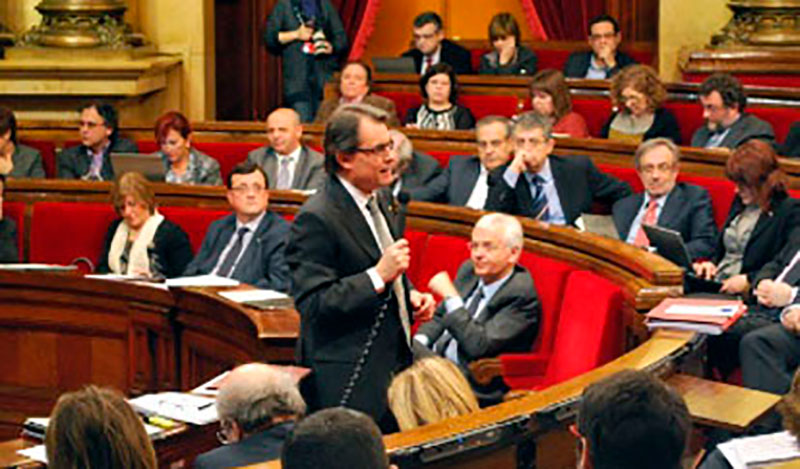
Intervenció en una sessió de control.